

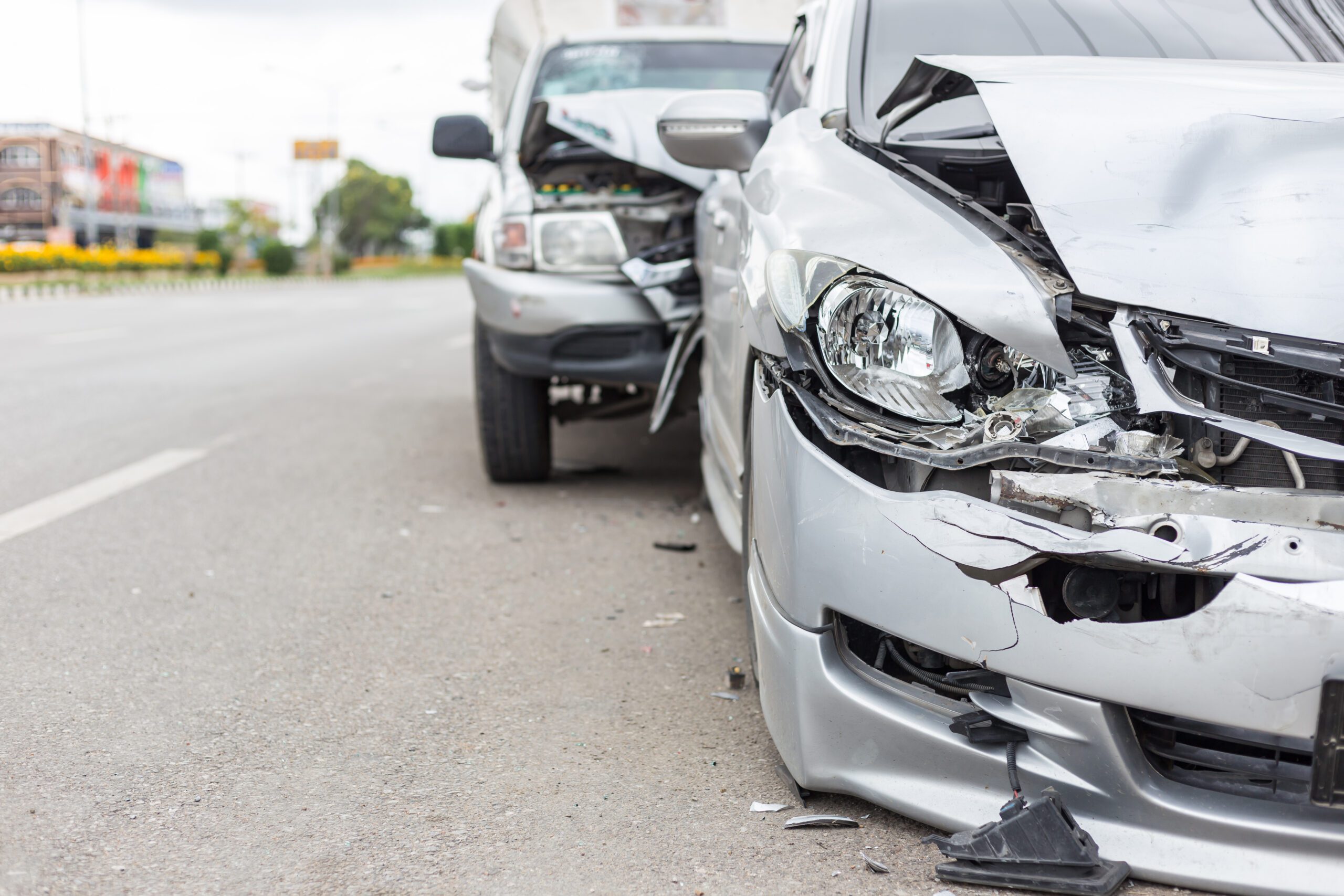
Rear-End Collisions in Michigan: Who Is at Fault and What Macomb County Drivers Should Know

Rear-end crashes happen every day on Macomb County roads, from stop-and-go traffic on I-696 and I-94 to red lights along Hall Road, Gratiot Avenue, and Van Dyke Avenue. Many people assume these collisions are minor fender-benders, but a rear-end collision in Michigan can cause lasting neck, back, and head injuries, and it often leads to questions about fault and insurance.
Michigan law has a specific rule that shapes how these crashes are evaluated, and understanding it can make a difference after a collision.
According to the Michigan State Police’s 2024 crash data release, Michigan recorded 288,880 crashes and 1,099 traffic deaths in 2024. Rear-end collisions are among the types of crashes drivers encounter on busy suburban roads and highways.
Michigan’s Rear-End Collision Presumption
Michigan has a statute specifically addressing rear-end crashes.
Under MCL 257.402, when competent evidence establishes that a vehicle overtook and struck the rear of another vehicle traveling in the same direction, or one lawfully standing on a highway, the driver of the striking vehicle is considered prima facie negligent.
This creates a rebuttable presumption of negligence against the striking driver.
In practical terms, the law provides an initial basis for finding that the rear driver acted negligently. However, the presumption does not automatically establish liability or prevent the driver from presenting evidence explaining the collision.
The statute also addresses circumstances in which the presumption may apply to the owner of the striking vehicle or the driver’s employer, subject to applicable legal requirements.
The Rear-End Presumption Is Not Absolute
A presumption is a starting point rather than a final determination.
A driver who struck another vehicle from behind may present evidence challenging the presumption, including evidence about the actions of other motorists or unusual circumstances surrounding the crash.
MCL 257.402 also includes an important exception involving nighttime visibility.
The statute provides that the owner of the vehicle struck from behind cannot rely on the presumption when the collision occurs between one hour after sunset and one hour before sunrise and the struck vehicle lacks a lighted lamp reasonably visible to drivers approaching from behind.
This exception affects the availability of the statutory presumption. It does not automatically establish that the driver of the struck vehicle caused the collision.
Working taillights are particularly important during fall and winter, when many Macomb County drivers commute before sunrise or after dark.
Other Michigan Traffic Laws That May Apply
Two additional Michigan traffic laws are often relevant when determining responsibility for a rear-end collision.
- Following too closely: Under MCL 257.643, drivers may not follow another vehicle more closely than is reasonable and prudent, considering speed, traffic, and roadway conditions.
- The basic speed law: Under MCL 257.627, drivers must operate at a careful and prudent speed appropriate for existing conditions and comply with the assured clear distance requirement.
Together, these rules require drivers to account for traffic conditions and maintain sufficient control of their vehicles to respond safely when traffic ahead slows or stops.
However, whether a particular driver violated either statute depends on the circumstances and available evidence.
Multi-Vehicle Chain-Reaction Crashes
Rear-end collisions on busy freeways sometimes involve three or more vehicles.
For example, one vehicle may strike the car ahead and push it into another vehicle, creating a chain-reaction collision.
Determining fault can become complicated because each impact may involve different circumstances.
Michigan’s rear-end negligence presumption may be relevant to particular impacts when its statutory requirements are satisfied, but it should not be applied automatically to every driver involved in a chain reaction.
Investigators and insurers may examine:
- The sequence of collisions.
- The speed and position of each vehicle.
- Following distances before the impacts.
- Whether a vehicle was pushed forward by another collision.
- Traffic conditions, braking, and lane changes.
- Photographs, dashcam recordings, and witness statements.
A driver in the middle of a chain-reaction collision may have been struck from behind and pushed into the vehicle ahead without independently causing the second impact.
Documenting the sequence of events can be important when determining each driver’s potential responsibility.
Common Causes of Rear-End Crashes in Macomb County
Several factors can contribute to rear-end collisions on local roads and highways.
- Distracted driving: Looking at a phone, navigation screen, or passenger can cause a driver to miss brake lights or slowing traffic.
- Tailgating: Following too closely reduces the time and distance available to stop.
- Speeding: Higher speeds increase stopping distance and may increase the severity of an impact.
- Stop-and-go freeway traffic: Sudden slowdowns on I-696, I-94, and M-59 can create hazards for inattentive drivers.
- Poor weather and road conditions: Rain, wet leaves, ice, and reduced visibility may affect traction and stopping distances.
- Impaired or drowsy driving: Alcohol, drugs, and fatigue can affect judgment and reaction time.
- Chain reactions: An initial collision can push one vehicle into another, involving several motorists.
Identifying the circumstances that contributed to a collision is important when evaluating negligence and potential liability.
Common Injuries in Rear-End Collisions
Rear-end impacts can cause injuries ranging from temporary discomfort to serious medical conditions.
The severity depends on factors such as vehicle speed, impact forces, occupant position, and the circumstances of the collision.
Potential injuries include:
- Whiplash and neck sprains: Sudden movement of the head and neck can strain muscles, ligaments, and other tissues.
- Back injuries: Rear-end collisions may cause spinal strains, disc injuries, or aggravation of existing back conditions.
- Concussions and traumatic brain injuries: Rapid acceleration and deceleration can cause brain injuries even without a direct blow to the head.
- Shoulder and chest injuries: Seat belts and other restraint systems may contribute to bruising or other injuries during a significant impact.
- Wrist and arm injuries: Occupants may injure their hands, wrists, or arms while bracing for a collision.
Some injuries cause immediate symptoms, while others become noticeable later.
Anyone experiencing pain, dizziness, neurological symptoms, or other concerning changes after a crash should seek appropriate medical evaluation.
Severe symptoms, such as loss of consciousness, significant weakness, difficulty breathing, or severe pain, require immediate medical attention.
Insurance and Claims After a Rear-End Collision
Michigan’s no-fault insurance system affects how injured motorists and passengers pursue benefits following an accident.
Even when another driver appears responsible for a rear-end crash, determining which insurance company must pay benefits can involve specific statutory rules.
No-Fault PIP Benefits
Under MCL 500.3105, Michigan personal protection insurance (PIP) provides qualifying benefits for accidental bodily injuries arising out of the ownership, operation, maintenance, or use of a motor vehicle.
These benefits are generally available without regard to who caused the accident.
Depending on the person’s circumstances and applicable coverage, PIP benefits may include medical expenses, wage loss, and certain other covered losses.
However, the injured person’s own insurer is not necessarily responsible in every case.
Michigan’s insurance priority rules determine which insurer must provide benefits. Depending on the circumstances, that may involve the person’s own policy, a qualifying household member’s policy, or another insurer designated under Michigan law.
Coverage limitations and other statutory requirements may also apply.
Claims Against the At-Fault Driver
A person injured in a rear-end collision may also have a claim against a legally responsible driver.
Under MCL 500.3135, noneconomic damages, including pain and suffering, may be recoverable when the statutory requirements are met.
These claims generally involve injuries resulting in death, serious impairment of body function, or permanent serious disfigurement.
When the requirements of MCL 257.402 are satisfied, the rear-end negligence presumption may be relevant evidence in determining the striking driver’s responsibility.
However, establishing negligence does not automatically establish eligibility for every type of compensation.
The nature of the injuries, causation, applicable insurance laws, and other legal requirements must also be considered.
Vehicle Damage and Michigan’s Mini-Tort Law
Michigan’s mini-tort law may allow qualifying drivers to recover certain uninsured vehicle damage expenses from a legally responsible motorist.
For collisions occurring on or after July 1, 2020, the maximum mini-tort recovery is generally $3,000.
A collision deductible is one common example of an expense that may qualify.
However, the $3,000 amount is a statutory maximum rather than an automatic payment.
Recovery depends on the uninsured vehicle damage, the allocation of fault, required insurance coverage, and other statutory conditions.
Our guide to Michigan’s mini-tort law explains how these claims work and what drivers should know before seeking reimbursement.
Shared Fault and Filing Deadlines
Fault is not always assigned entirely to one driver.
Under Michigan’s comparative fault provisions, including MCL 600.2959, a person’s share of fault may reduce recoverable damages.
In certain claims, a person found more than 50 percent at fault cannot recover noneconomic damages.
The application of comparative fault rules depends on the type of claim and the governing statutes.
Filing deadlines are also important.
Under MCL 600.5805, many negligence-based personal injury lawsuits are subject to a three-year limitations period, although exceptions and other legal requirements may apply.
No-fault PIP claims have separate notice and filing requirements under MCL 500.3145, including a one-year framework that can affect eligibility for benefits.
A Macomb County car accident lawyer can help injured individuals understand applicable deadlines, insurance coverage, and potential claims after a rear-end collision.
What to Do After You Are Rear-Ended
The steps taken after a collision can affect both personal safety and the ability to document what happened.
- Check for injuries and call 911 when necessary. Request emergency assistance if someone is hurt or the collision creates an immediate danger.
- Move to a safe location when possible. Follow applicable traffic laws and avoid remaining in an unsafe position on the roadway.
- Exchange information. Obtain the other driver’s name, contact details, insurance information, and license plate number.
- Photograph the scene. Document vehicle damage, roadway conditions, traffic signals, lighting, and other relevant details when it is safe to do so.
- Identify witnesses. Collect contact information from people who observed the collision.
- Seek appropriate medical attention. Obtain prompt evaluation for injuries or symptoms that develop after the crash.
- Notify the appropriate insurer. Follow applicable reporting requirements and keep copies of communications and supporting documents.
These steps may help preserve evidence that becomes important when determining fault or pursuing insurance benefits.
How to Avoid Rear-End Crashes
Rear-end collisions can occur unexpectedly, but several driving habits may help reduce the risk.
- Maintain a safe following distance. Leave several seconds between vehicles under ordinary conditions and allow additional space in bad weather or heavy traffic.
- Watch traffic beyond the vehicle directly ahead. Brake lights and changing traffic patterns can provide early warning of slowdowns.
- Avoid phone distractions. Keep attention on driving rather than screens or messages.
- Maintain working brake lights and taillights. Proper lighting helps approaching drivers recognize when a vehicle is slowing or stopping.
- Brake smoothly when possible. Avoid unnecessary abrupt stops and signal turns early.
- Adjust speed for conditions. Reduce speed when visibility, traction, or traffic conditions make stopping more difficult.
Safe following distances and attentive driving are especially important on busy Macomb County roads where traffic conditions can change quickly.
Frequently Asked Questions
Is the rear driver always at fault in a Michigan rear-end crash?
No. Michigan law establishes a rebuttable presumption of negligence in qualifying rear-end collisions under MCL 257.402. However, the striking driver may present evidence challenging that presumption, and the final determination of fault depends on the circumstances.
Can I lose the rear-end presumption if my taillights were out?
Possibly. MCL 257.402 includes an exception involving collisions occurring between one hour after sunset and one hour before sunrise when the struck vehicle lacks a lighted lamp reasonably visible to approaching drivers. The exception affects the struck vehicle owner’s ability to rely on the statutory presumption but does not automatically establish fault.
Who pays my medical bills after I am rear-ended in Michigan?
Qualifying medical expenses may be covered through Michigan’s no-fault PIP system. The responsible insurer depends on applicable insurance priority rules, available coverage, and the injured person’s circumstances. It is not necessarily the injured person’s own insurer in every case.
Can I recover my deductible after being rear-ended?
Often, yes. Michigan’s mini-tort law may allow recovery of a qualifying collision deductible or other uninsured vehicle damage. For crashes on or after July 1, 2020, the maximum recovery is generally $3,000, subject to comparative fault and other statutory requirements.
How long after a rear-end collision can I file a lawsuit in Michigan?
Many negligence-based personal injury lawsuits are subject to a three-year limitations period, although exceptions may apply. No-fault PIP claims have separate notice and filing requirements, including deadlines under MCL 500.3145. The applicable deadline depends on the type of claim and circumstances.
Rear-end collisions may be common, but their effects on a person’s health, vehicle, and finances can be serious.
Understanding Michigan’s negligence presumption, insurance rules, and filing requirements can help drivers make informed decisions after a crash.
If you were injured after being struck from behind anywhere in Macomb County, the attorneys at Macomb County Accident Attorneys can help you understand your legal options.
You can contact our office to discuss what happened.
Note: Our law office relies on external sources for the content of this post. Although we aim for accuracy, we have not independently verified all facts related to this incident. Please notify Mihelich & Kavanaugh, PLC for corrections if you identify any inaccuracies. Posts will be removed upon request.
Disclaimer: The content of this post is intended for informational purposes only and does not constitute a solicitation for business. The information contained herein is not intended to offer legal or medical advice. If you or someone you care about has been injured in an accident, it is recommended to seek immediate medical assistance. The photo featured in this post was not taken at the actual scene of the accident.
Map of Macomb County, Michigan, where rear-end collisions occur on busy roads such as I-696, I-94, Hall Road, Gratiot Avenue, and Van Dyke Avenue.