

What Happens When a Drunk Driver Kills Someone in Macomb County — A Guide for Victims and Their Families

Drunk driving crashes are preventable tragedies. They are the foreseeable result of a deliberate choice — a decision to get behind the wheel while impaired — and Michigan law treats them that way. In Macomb County, where approximately 2,000 or more OWI arrests are made every year, and where alcohol and drug-related fatalities have been rising even as enforcement has declined, the legal consequences for drunk drivers who kill or seriously injure someone are severe. But the criminal process is only half the picture. For the families of victims, Michigan’s civil law provides a separate and powerful avenue for justice — one that moves on its own timeline and does not depend on the outcome of any criminal case.
This is what families in Macomb County need to know when a drunk driver takes someone from them.
The scope of the problem in Macomb County is significant. According to a Bridge Michigan investigation published in 2025 using Michigan State Police drunk driving audit data, alcohol and drug-related fatalities in Macomb County have been rising even as the number of OWI arrests has declined — down 15% from 2014 to 2023. Statewide, Michigan recorded 8,542 alcohol-involved crashes in 2024, resulting in 307 deaths. Approximately 40.7% of all traffic crash fatalities in Michigan in 2024 involved alcohol or drugs. These are not numbers from distant communities — they reflect what is happening on Gratiot Avenue, Van Dyke, Groesbeck Highway, Hall Road, and every other major corridor in Macomb County, every week of the year.
The recent cases from our own community illustrate the human cost with brutal clarity. On April 9, 2026, an off-duty Detroit firefighter named Travis Turner drove his Ford Fusion at high speed on Groesbeck Highway in Roseville and slammed into an 85-year-old woman’s Saturn Ion, killing her at the scene. Turner’s blood alcohol content was above the legal limit. He was arraigned on charges of OWI causing death and possession of a firearm while under the influence and has since been bound over to stand trial in Macomb County Circuit Court. In January 2026, a Macomb County jury convicted Jack Robb of second-degree murder for a crash in Shelby Township when he was 17 years old — he had been driving nearly 90 miles per hour, ran a red light, and killed 26-year-old Austin Southwell after drinking alcohol and smoking marijuana. These cases reflect a recurring problem on Macomb County roads and a reminder of the devastating consequences impaired driving can have for victims and their families.
What the criminal process looks like — and why it is not enough for victims’ families.
When a drunk driver kills someone in Macomb County, the Macomb County Prosecutor’s Office can charge them with OWI causing death, a 15-year felony under Michigan law. If the facts support it — as they did in the Jack Robb case — prosecutors can pursue second-degree murder charges, which carry potential life sentences. The drunk driver faces arraignment, probable cause conferences, preliminary examinations, and ultimately trial or a plea. Bond conditions typically include GPS monitoring and alcohol testing devices. If convicted, they face prison time, fines, license revocation, and a permanent felony record.
All of that is the criminal process. It is the state’s case against the driver. It is not the family’s case.
Michigan’s civil law gives the families of drunk driving victims their own separate legal path — one that operates independently of the criminal case and is not bound by its timeline or outcome. Under Michigan’s wrongful death statute, the personal representative of the deceased victim’s estate can pursue a civil claim against the drunk driver for the full scope of the family’s losses. That includes compensation for the loss of the victim’s companionship, love, and guidance; the grief and emotional anguish suffered by the family; funeral and burial expenses; the financial contributions the victim would have made over their lifetime; and the medical costs incurred between the crash and the death. These damages can be substantial — particularly when the victim was young, was a working parent, or was the primary financial provider for their family.
What families should know about the civil case.
A civil wrongful death claim against a drunk driver in Macomb County does not require a criminal conviction. The civil standard of proof — a preponderance of the evidence, meaning more likely than not — is lower than the criminal standard of beyond a reasonable doubt. A drunk driver can be held civilly liable even if they are acquitted in criminal court, and families do not need to wait for the criminal case to conclude before filing a civil claim. In some situations, acting quickly is essential — evidence from the crash scene, toxicology records, surveillance footage, and witness accounts must be preserved before they disappear.
It is also important to understand that in drunk driving crash cases, the at-fault driver’s auto insurance policy is the primary source of civil recovery. Michigan requires drivers to carry liability coverage, though minimum coverage limits are often insufficient for fatal crash cases. An experienced auto accident attorney will investigate every available source of recovery — including underinsured motorist coverage on the victim’s own policy — to make sure the family receives every dollar they are entitled to under Michigan law.
One final point that families often do not realize is that the specific facts of a drunk driving crash matter. Evidence that a driver was heavily impaired, had prior OWI convictions, or knowingly chose to drive while intoxicated may play an important role in a wrongful death claim and the compensation available under Michigan law. An attorney with experience in Macomb County drunk driving wrongful death cases can evaluate the facts of the crash, identify all available sources of recovery, and help families understand their rights under Michigan law.
What to do if a drunk driver killed your family member in Macomb County.
The most important step is to consult with a Michigan personal injury attorney as quickly as possible. Do not wait for the criminal case to proceed. Do not give recorded statements to any insurance company before speaking with counsel. Keep every document related to the crash — police reports, medical records, funeral expenses, insurance correspondence — and do not discard anything. If the driver was arrested and charged, follow the criminal proceedings closely, but understand that the civil case is yours to pursue on your own timeline with your own legal team.
If a drunk driver killed or seriously injured someone you love in Macomb County, you have legal rights and you have options. Our team serves clients throughout Macomb County — Roseville, Sterling Heights, Clinton Township, Shelby Township, Warren, and every community in between. To speak with an experienced Michigan personal injury attorney about your case, contact us today.
Source: Bridge Michigan, Michigan Auto Law, Michigan State Police
Note: Our law office relies on external sources for the content of this post. Although we aim for accuracy, we have not independently verified all facts related to this incident. Please notify Mihelich & Kavanaugh, PLC for corrections if you identify any inaccuracies. Posts will be removed upon request.
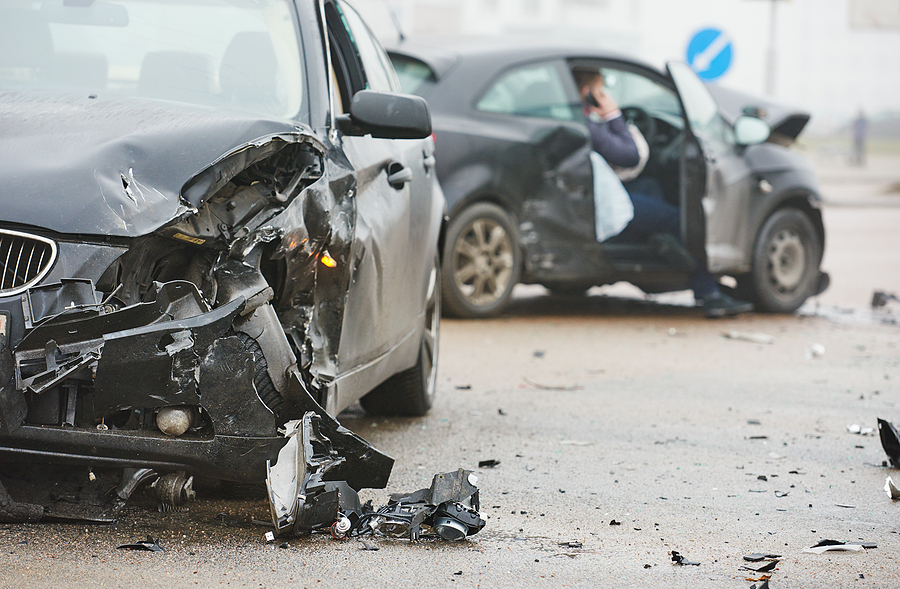
Disclaimer: The content of this post is intended for informational purposes only and does not constitute a solicitation for business. The information contained herein is not intended to offer legal or medical advice. If you or someone you care about has been injured in an accident, it is recommended to seek immediate medical assistance. The photo featured in this post was not taken at the actual scene of the accident.