

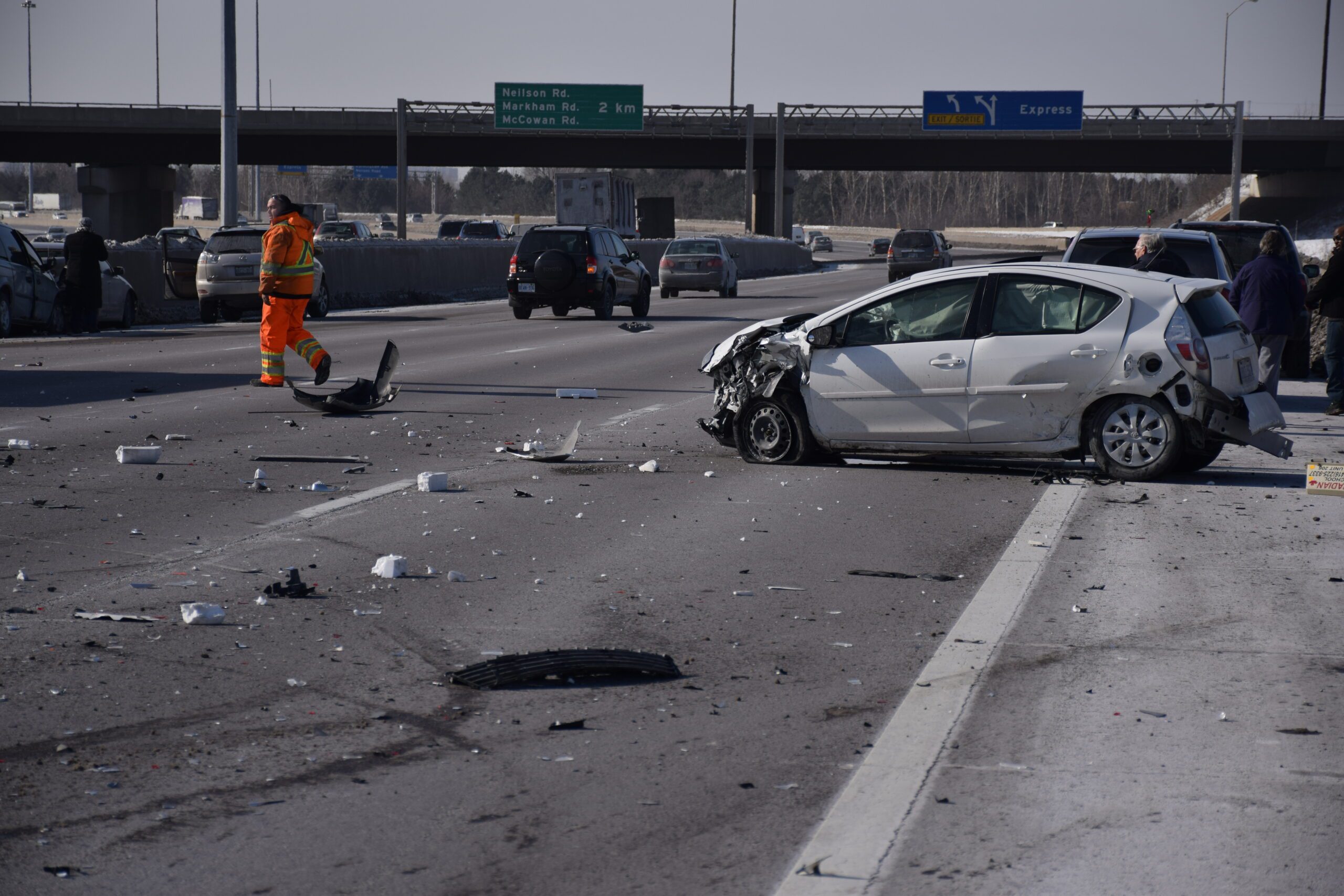
Multi-Vehicle Crash Closes I-94 Near Greenfield Road, Injuries Reported [DEARBORN, MI]

An I-94 crash in Dearborn involving multiple vehicles caused injuries and major freeway closures Wednesday, October 28, 2026. The collision occurred near Greenfield Road, according to Michigan State Police. All westbound lanes were closed, and portions of eastbound I-94 were blocked while troopers responded.
The freeway has since reopened, but authorities have not released details about the number of injured people or what caused the collision.
What Happened in the I-94 Crash in Dearborn
Michigan State Police reported that troopers responded Wednesday to a multi-vehicle collision on I-94 near Greenfield Road in Dearborn.
Authorities confirmed that injuries were reported, although they did not specify how many people were hurt or the severity of their injuries.
While emergency crews worked at the scene, all westbound lanes of I-94 were closed.
The left and right lanes of eastbound I-94 were also blocked, creating significant traffic disruptions in both directions.
The Michigan Department of Transportation separately reported a westbound I-94 closure in the Dearborn area. Traffic restrictions affected the surrounding freeway corridor as emergency responders addressed the collision.
All eastbound and westbound lanes have since reopened.
State police have not publicly confirmed the exact number of vehicles involved, the identities of those injured, or what caused the crash.
The circumstances remain under investigation.
Why Multi-Vehicle Crashes Happen on I-94
I-94 is a major Michigan freeway carrying commuter and commercial traffic between Detroit, Dearborn, and the airport corridor, with connections extending toward Macomb County.
The freeway includes heavily traveled interchanges where drivers must adjust to merging vehicles, changing traffic speeds, and congestion.
Investigators have not identified the cause of Wednesday’s collision.
However, multi-vehicle freeway crashes can involve several contributing factors, including:
- Following too closely: Drivers may have insufficient stopping distance when traffic slows unexpectedly.
- Distracted driving: Phone use or other distractions can delay a driver’s reaction to changing conditions.
- Unsafe lane changes: Improper merging or lane changes may cause vehicles to collide.
- Excessive speed: Higher speeds increase stopping distances and the potential severity of a collision.
- Sudden traffic slowdowns: Unexpected congestion can contribute to chain-reaction collisions.
These are general examples and should not be interpreted as findings about Wednesday’s crash.
According to the Michigan State Police’s 2024 crash data release, Michigan recorded 288,880 traffic crashes and 1,099 traffic fatalities during 2024.
Those figures demonstrate the continuing impact of motor vehicle collisions throughout the state.
Common Injuries in Multi-Vehicle Freeway Crashes
Michigan State Police have not released details describing the injuries sustained in Wednesday’s collision.
In general, multi-vehicle freeway crashes can cause a range of injuries, particularly when vehicles experience multiple impacts.
Potential injuries include:
- Whiplash and neck injuries: Rear-end impacts can cause sudden movement of the head and neck.
- Back injuries: Significant collision forces may cause spinal strains, fractures, or disc injuries.
- Concussions and traumatic brain injuries: Rapid acceleration or deceleration can cause head injuries, even without direct contact.
- Chest and shoulder injuries: Seat belts, airbags, and vehicle interiors may contribute to injuries during a crash.
- Broken bones: Arms, legs, wrists, and other areas may be injured during severe impacts.
Some injuries may not produce noticeable symptoms immediately.
Anyone experiencing pain, dizziness, head injury symptoms, or other concerning changes following a collision should seek prompt medical evaluation.
Severe or worsening symptoms require emergency attention.
Michigan Law and Multi-Vehicle Crashes
Michigan law establishes rules governing safe vehicle operation, automobile insurance benefits, and liability after traffic collisions.
The following information explains general legal principles and does not establish responsibility for Wednesday’s I-94 collision.
Rules of the Road
Under MCL 257.643, drivers may not follow another vehicle more closely than is reasonable and prudent, considering vehicle speed, traffic, and roadway conditions.
This requirement is particularly important on freeways where traffic can slow unexpectedly.
Michigan’s basic speed law, MCL 257.627, requires motorists to travel at a careful and prudent speed appropriate for the circumstances.
Drivers must also comply with applicable requirements concerning stopping distance and roadway conditions.
Under MCL 257.622, Michigan law establishes reporting requirements for qualifying crashes involving injury, death, or apparent property damage meeting the statutory threshold.
Whether a driver violated any of these laws in Wednesday’s collision has not been established.
No-Fault Benefits for Injuries
Michigan’s no-fault insurance system provides personal protection insurance (PIP) benefits to qualifying individuals injured in motor vehicle collisions.
Under MCL 500.3105, PIP benefits generally apply without regard to fault when the injury satisfies the statutory requirements.
Depending on the circumstances and applicable coverage, benefits may include medical expenses, wage loss, and certain other covered losses.
However, the responsible insurer and available benefits depend on Michigan’s insurance priority rules and other statutory requirements.
An injured person does not necessarily receive benefits through their own auto insurance policy in every situation.
Separate liability claims may also be available.
Under MCL 500.3135, qualifying noneconomic damages may be recoverable when injuries result in death, serious impairment of body function, or permanent serious disfigurement.
The availability of such damages depends on the circumstances and applicable legal requirements.
Vehicle Damage and Michigan’s Mini-Tort Law
Michigan’s mini-tort law may provide a way to recover certain uninsured vehicle damage from a legally responsible driver.
For qualifying crashes occurring on or after July 1, 2020, recovery may reach up to $3,000, subject to statutory requirements.
The mini-tort may apply to certain uncovered vehicle repair expenses or collision deductibles.
However, recovery is not automatic.
The amount available depends on the qualifying damage, fault allocation, and other legal requirements.
Our guide to Michigan’s mini-tort law explains how these claims work.
Shared Fault and Filing Deadlines
Determining responsibility in a multi-vehicle collision can be complicated.
One driver may contribute to an initial impact, while another driver’s actions may contribute to a subsequent collision.
Each impact and the actions of the drivers involved may require separate examination.
Michigan’s comparative fault provisions, including MCL 600.2959, may reduce recoverable damages according to the applicable allocation of fault.
Under Michigan’s automobile negligence framework, a person found more than 50 percent at fault generally cannot recover noneconomic damages, subject to the applicable statutory provisions.
Different categories of damages may be treated differently.
Many negligence-based personal injury lawsuits are subject to a three-year limitations period under MCL 600.5805, although exceptions and other deadlines may apply.
A Michigan car accident lawyer can help injured individuals evaluate insurance coverage, potential liability, and applicable deadlines.
The Danger of Secondary Crashes
An I-94 crash in Dearborn can create additional hazards beyond the initial collision, particularly when traffic stops unexpectedly on a busy freeway.
Approaching drivers may not immediately recognize stopped vehicles or emergency activity ahead.
People who exit disabled vehicles may also face serious risks from passing traffic.
Earlier on October 28, Michigan State Police reported a separate fatal incident on I-96 in Livingston County.
According to the original reporting, a driver was struck by a passing box truck after exiting his SUV in a travel lane to inspect damage from a collision involving a deer.
That incident was separate from the Dearborn crash, but it illustrates the dangers associated with standing near moving freeway traffic.
After a freeway collision, drivers should move their vehicles out of active travel lanes when it is safe and possible to do so.
If a vehicle is disabled, activate hazard lights, call 911, and follow emergency dispatcher instructions.
Whether to remain inside or exit depends on the vehicle’s position, surrounding traffic, and immediate hazards.
Avoid standing in active travel lanes or attempting to cross moving freeway traffic.
When Commercial Vehicles Are Involved
Michigan State Police have not identified the types of vehicles involved in Wednesday’s collision.
However, I-94 is a major commercial transportation route used by semi-trucks, box trucks, delivery vehicles, and other commercial traffic.
When a commercial vehicle is involved in a multi-vehicle crash, additional legal and investigative considerations may arise.
Depending on the circumstances, relevant evidence may include:
- Driver qualification and training records.
- Vehicle maintenance and inspection documentation.
- Electronic logging device information.
- Company policies and dispatch records.
- Available vehicle data and witness statements.
Potential liability may also involve a vehicle owner or employer.
Under MCL 257.401, Michigan law establishes circumstances in which a motor vehicle owner may be liable for injuries resulting from negligent operation of the vehicle with the owner’s express or implied consent or knowledge.
However, the existence of a commercial vehicle or employment relationship does not automatically establish liability.
Ownership, consent, driver conduct, and other applicable legal requirements must be considered.
Handling Insurance After a Multi-Vehicle Crash
Collisions involving several vehicles can create complicated insurance questions, particularly when responsibility for different impacts is disputed.
Several steps may help injured motorists document their losses and communicate with insurers.
- Notify the appropriate insurance company. Report the collision promptly and determine which insurer may be responsible for applicable benefits.
- Request the police crash report. The completed report may contain important information about the vehicles, drivers, and investigating officer’s observations.
- Preserve documentation. Keep photographs, repair estimates, medical bills, rental receipts, and insurance correspondence.
- Review requests for recorded statements. Understand the purpose of a statement and the applicable insurance requirements before responding.
- Evaluate injury claims carefully. Consider the extent of medical treatment and available information before agreeing to resolve a claim.
Insurance responsibilities depend on the circumstances and applicable Michigan law.
What to Do After a Freeway Crash
Freeway collisions can leave motorists in dangerous situations, especially when traffic continues moving around disabled vehicles.
The following steps may help protect safety and preserve important information.
- Prioritize safety. Move to a safe location when possible, activate hazard lights, and follow emergency instructions.
- Call 911. Report the collision, injuries, and any vehicles blocking traffic.
- Exchange information when safe. Obtain available contact and insurance information from the drivers involved.
- Document the scene. Photograph vehicle damage and roadway conditions only when doing so does not create additional danger.
- Seek appropriate medical attention. Obtain emergency care for serious symptoms and evaluation for injuries or concerning changes.
- Notify the appropriate insurer. Follow applicable reporting and filing requirements.
Prompt documentation may help when multiple insurers later evaluate the circumstances.
Freeway Safety Tips
Although motorists cannot prevent every collision, several driving habits can reduce the risk of becoming involved in a multi-vehicle freeway crash.
- Maintain adequate following distance. Leave enough room to respond safely when traffic slows.
- Watch traffic farther ahead. Brake lights several vehicles ahead may provide early warning of congestion.
- Reduce speed near backups. Slow down gradually when approaching stopped traffic or emergency activity.
- Check blind spots before changing lanes. Use signals and confirm that adjacent lanes are clear.
- Give commercial vehicles additional space. Large trucks may require greater stopping distances and have significant blind spots.
Staying attentive to surrounding traffic is particularly important on heavily traveled freeways such as I-94.
Frequently Asked Questions
Who is at fault in a multi-vehicle crash on a Michigan freeway?
Fault depends on the circumstances and evidence. Investigators may examine following distance, speed, driver attention, lane changes, and the sequence of impacts. More than one driver may share responsibility, and Michigan’s comparative fault rules can affect recoverable damages.
Does no-fault insurance cover me if another driver caused the crash?
Qualifying individuals may receive Michigan no-fault PIP benefits regardless of which driver caused the collision. However, eligibility, available benefits, and the responsible insurer depend on statutory requirements and insurance priority rules. A separate liability claim may also be possible.
Can I recover my deductible after a freeway crash that was not my fault?
Possibly. For qualifying crashes occurring on or after July 1, 2020, Michigan’s mini-tort law may allow recovery of up to $3,000 in uninsured vehicle damage, including certain deductibles. Recovery depends on statutory requirements and fault allocation.
How do I get a copy of a Michigan State Police crash report?
Crash reports investigated by Michigan State Police can generally be requested after they are completed and available for release. Obtaining the incident or report number from the investigating agency can help identify the correct record.
How long do I have to file a claim after a crash in Michigan?
Many negligence-based personal injury lawsuits are subject to a three-year limitations period, although exceptions may apply. Michigan no-fault PIP claims have separate notice and filing requirements under MCL 500.3145, including a one-year framework with statutory qualifications.
We hope everyone injured in Wednesday’s I-94 collision in Dearborn makes a full recovery.
Multi-vehicle freeway crashes can leave motorists dealing with medical expenses, vehicle damage, and complicated insurance questions.
The attorneys at Macomb County Accident Attorneys help people throughout Metro Detroit understand their legal options after serious motor vehicle accidents.
If you have questions about a collision, insurance benefits, or a potential injury claim, contact our office to discuss your circumstances.
Source: ClickOnDetroit
Note: Our law office relies on external sources for the content of this post. Although we aim for accuracy, we have not independently verified all facts related to this incident. Please notify Mihelich & Kavanaugh, PLC for corrections if you identify any inaccuracies. Posts will be removed upon request.
Disclaimer: The content of this post is intended for informational purposes only and does not constitute a solicitation for business. The information contained herein is not intended to offer legal or medical advice. If you or someone you care about has been injured in an accident, it is recommended to seek immediate medical assistance. The photo featured in this post was not taken at the actual scene of the accident.
Map of I-94 near Greenfield Road in Dearborn, Michigan, where a multi-vehicle crash caused injuries and freeway closures on October 28, 2026.